
Facing Forward
Health CEOs and University Presidents in Uncertain Times

I once asked my mentor, a fellow dean who was respected by his colleagues for his vision and appreciation for the obstacles we faced, if he could describe university presidents. He thought for a moment and then made the following observations: Generally, university presidents fall into two categories. There are the symbolic ones who build edifices with their name on the cornerstone and the operational ones who devote all their time and energy to building strong programs. They are seldom found in the same person.
He made his observation in the late-1990s when things were relatively uncomplicated and university presidents, much like their counterparts in healthcare, were largely traditional leaders of their respective organizations. Things have changed dramatically since then.
The average tenure of a university president at the time I spoke with my mentor was approximately 9 years. Today, the average tenure has dropped precipitously to 5.9 years, and the trend is accelerating. The average dropped to 4.9 years in 2025. What’s more, a majority of those currently serving don’t think they will be in their current role in five years. And those presidents, according to the survey, which ACE conducts every five years, aren’t leaving for some other college’s top job. Instead, they are looking at possible consultant roles, returning to the faculty, or working in a nonprofit outside of higher education. The American Council on Education Pulse Survey found higher education leaders grappling with intense federal policy shifts, financial pressures, and the rapid integration of new technologies.
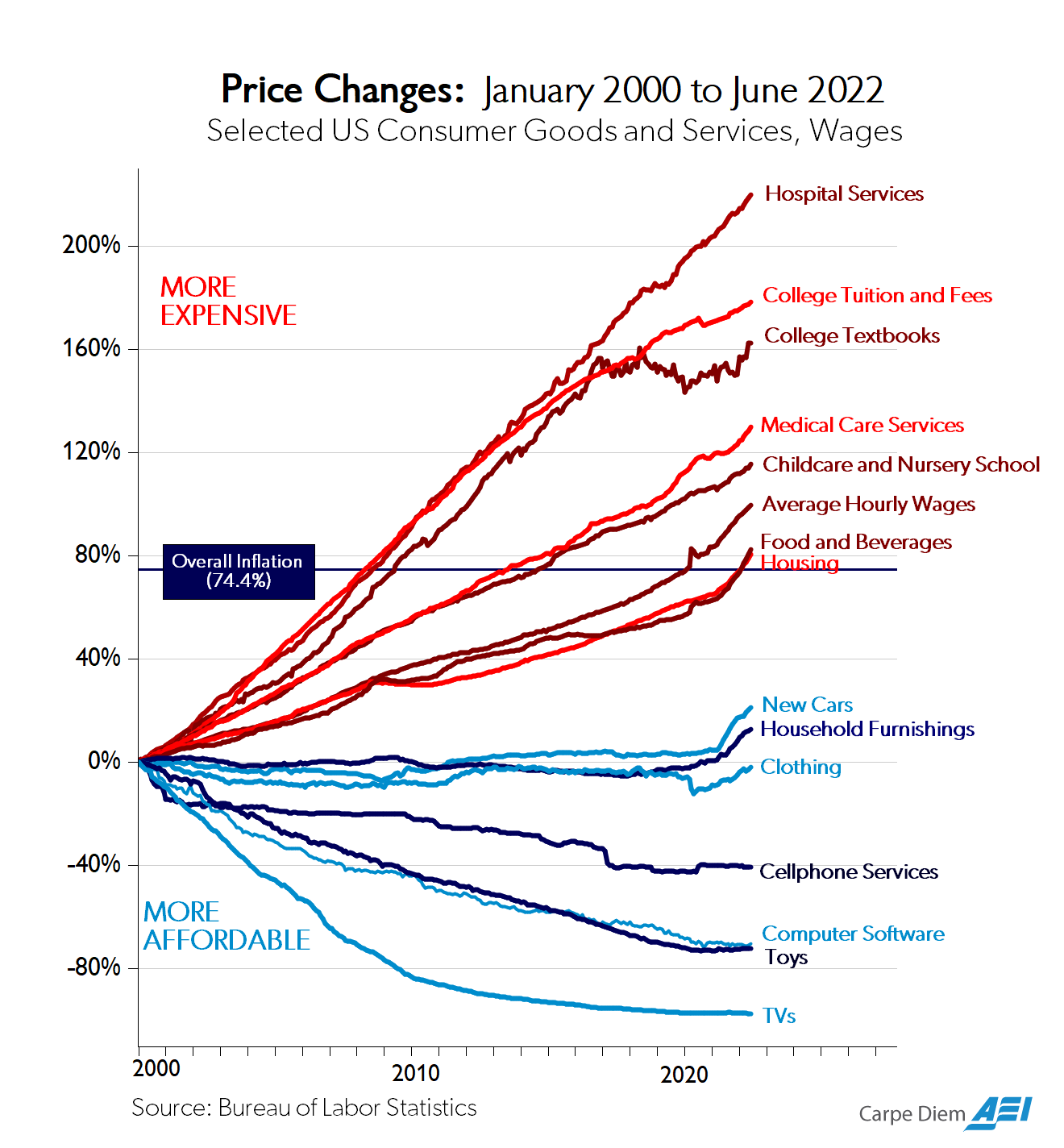
The chart below illustrates a major source of pressure on both CEOs and university presidents. Costs of their products and services have been rising faster than the cost of living for years and show no signs of abating.
One author, commenting on the turbulence in 2025, noted that College presidents faced an extraordinarily challenging year in 2025, marked by high-profile resignations, forced departures, and a wave of leadership instability across U.S. higher education institutions. What began as simmering tensions from previous years erupted into a full-blown crisis, driven by a perfect storm of political pressures, financial strains, and campus controversies.
Common drivers in early resignation by university presidents are.
Board–president conflicts.
Political pressure and public scrutiny
Financial stress and enrollment declines
Campus crises (activism, scandals, budget cuts)
Personal burnout from the role’s fundraising and political demands
Rapidly advancing technology and the inability of many institutions to adapt.
A striking illustration of how various factors - free speech principles, campus politics, donor influence, public scrutiny, and crisis management - can collide explosively in the public eye occurred during the December 2023 congressional hearing on antisemitism at elite universities.
On December 5, 2023, the presidents of Harvard (Claudine Gay), the University of Pennsylvania (Elizabeth “Liz” Magill), and MIT (Sally Kornbluth) appeared before the House Committee on Education and the Workforce to address rising antisemitism on college campuses following the October 7 Hamas attack on Israel.
A pivotal exchange came when Rep. Elise Stefanik repeatedly asked each president whether a student calling for the genocide of Jews would violate their university’s code of conduct on bullying or harassment. All three initially avoided a straightforward yes-or-no answer, emphasizing context and free expression policies.
Harvard’s Claudine Gay responded: It can be, depending on the context.
UPenn’s Liz Magill said something to the effect that it depends on whether the speech crossed into conduct amounting to harassment (often summarized as context-dependent).
MIT’s Sally Kornbluth gave a similar qualified response.
The clipped video of these exchanges quickly went viral, drawing widespread criticism for appearing deliberately evasive or insufficiently condemnatory of calls for genocide.
The fallout was swift and severe:
Magill resigned as UPenn president on December 9, 2023—just four days later—amid pressure from alumni, donors (including the withdrawal of a major gift), and the board of trustees’ Wharton School.
Gay resigned from Harvard on January 2, 2024, marking the shortest presidency in the university’s history (though additional plagiarism allegations also contributed to the pressure).
Kornbluth remained in her role at MIT despite some calls for her resignation.
The episode sparked intense debate about university leadership, free speech boundaries, and how presidents handle public crises. At the time, observers and critics quipped that future Ivy League presidents might benefit from mandatory training in crisis communications before facing congressional scrutiny.
Facing Forward
Universities and health systems share common institutional DNA. Both are professional bureaucracies built around highly autonomous experts, complex funding systems, and deep public trust. As those foundations are disrupted by demographic, financial, and political forces, leaders in both sectors are discovering that managing uncertainty - not preserving stability - has become the central challenge of institutional leadership. They also suffer from another common trait that makes rapid response to change and chaos difficult, if not impossible. I examined this trait in the last post on The Pragmatic Leader. Because of the complex environments in which they exist, leaders in both health care and higher education surround themselves with support staff that specializes in managing the complexities of their respective areas. Unfortunately, as I noted in the post, this phenomenon has led to the inability of organizations to adjust and alter course quickly.
Management scholars often classify universities and hospitals as professional bureaucracies.
This concept comes from the work by Henry Mintzberg, titled The Structuring of Organizations.[1] He described professional bureaucracies as organizations where
Highly trained professionals hold significant autonomy
Authority is distributed rather than centralized
Cultural norms can outweigh formal hierarchy.
The work of these institutions is highly structured, regulated from within, and subject to added scrutiny from accrediting bodies, licensing organizations, and - in the case of public institutions - legislative oversight. The combined weight of these interacting forces nearly guarantees that change will be glacial at best and nonexistent in many critical areas.
Corporate CEOs and university presidents both navigate rapid, multifaceted change—driven by technology (e.g., AI), economic pressures, shifting societal expectations, and disruption—but their strategies differ significantly due to organizational structures, accountability, and stakeholder dynamics. CEOs operate in hierarchical, profit-oriented environments with clearer lines of authority, enabling faster execution. University presidents lead in decentralized, mission-driven institutions governed by shared faculty input, tenure protections, and diverse constituencies (students, alumni, donors, regulators), which demand consensus and cultural sensitivity. These differences shape how each group approaches change management, though there is some convergence as universities face corporate-like financial and operational pressures.
Corporate CEOs: Emphasis on Agility, Speed, and Execution
CEOs prioritize nimbleness in an era of perpetual organizational upheaval. Their strategies focus on rapid adaptation to maintain competitiveness, with tools like restructuring, technology adoption, and talent optimization. Key elements include.
Decisive, top-down action with supporting collaboration: They break down silos, position C-suite leaders as enterprise-wide thinkers (not just functional heads), and reduce bureaucracy for quicker decisions.
Frequent, transparent communication and motivation: CEOs stress winning hearts and minds, providing regular updates to align employees on outcomes amid uncertainty, and balancing support with performance demands to avoid burnout.
Board partnerships and external networks: They engage boards for strategy and risk input and tap outside networks for diverse insights on emerging disruptions like AI or geopolitics.
Focus on measurable outcomes and superpowers: Strategies target speed, technology integration, talent retention, and resilience. Change is often disruptive - restructuring, layoffs, or innovation - to drive efficiency, revenue growth, and shareholder value.
CEO turnover remained elevated in 2025, with a notable number of departures prompted by activist investor campaigns - and boards have responded by emphasizing a measured, long-term focus on resilience over reactive leadership changes. This signals that boards are done gambling on symbolic figureheads who can’t hold the organization together under pressure. There has been a noticeable shift in boards’ approach to CEO succession planning.
Boards - especially in the current environment- prefer programmatic presidents with symbolic capability, not the reverse. The ideal candidate can execute first and inspire second. What boards are specifically penalizing is the purely symbolic leader who lacks operational credibility, because.
Activist investors and institutional shareholders are scrutinizing management competence more aggressively.
Post-pandemic complexity (AI disruption, geopolitical risk, workforce volatility) demands leaders who understand their organizations deeply.
Succession crises caused by over-reliance on a single charismatic figure have made boards more risk-averse.
The safest hire for most boards today is someone who can run the machine and walk into a room and make a case of why it matters. The purely symbolic president is a luxury - or a risk - most boards can no longer justify.
University Presidents: Emphasis on Consensus, Trust-Building, and Mission Alignment
Presidents operate in environments of distributed authority and deeply rooted traditions, where top-down mandates alone often fail (roughly 80% of higher ed change initiatives collapse due to poor stakeholder buy-in or misaligned priorities). Strategies are coalition-driven, incremental, or transformative, only with broad support and guided by models that prioritize culture and people. Key elements include:
Coalition-building and early stakeholder engagement: Presidents form guiding coalitions, co-design solutions with faculty, students, staff, and boards through retreats and listening sessions, and address resistance upfront. People support what they help create.
Trust-focused cultural transformation: They unfreeze mindsets through dialogue and debate, reinforce individual adoption, and use Academic Communities for grassroots scaling. Visible leadership builds trust over time rather than imposing change.
Storytelling, listening, and unifying diverse audiences: As communicators and storytellers, presidents balance analytical planning with emotional intelligence to inspire across opposing groups - tenured faculty, students, donors, and communities - while having opposites, sometimes to the detriment of the institution.
Long-term, mission-driven, holistic focus: Change aligns with societal needs and institutional identity (“Who are we?”), avoiding fads. They expect ecosystem ripple effects (e.g., how a new system impacts pedagogy and workload) and emphasize sustainability over speed. This yields slower but often more enduring change, suited to shared governance, though it can hinder institutional response to crises (e.g., budget shortfalls or enrollment drops).
The future is redefining the present.
Whether you are in the corporate world with a health-system CEO who is trying to manage almost unmanageable change or a university president managing declining enrollment and faced with a public that no longer trusts them with their children, the messages are clear. The era of the Symbolic Leader is fading. What is replacing it is an evolved form of the programmatic leader - one less concerned with embodying institutional tradition than with rebuilding institutional architecture. The next generation of health-system CEOs and university presidents will look less like figureheads and more like enterprise architects. Their mandate will not simply be to manage these institutions, but to redesign them - balancing financial survival, political legitimacy, and professional culture in environments defined by persistent uncertainty.
This model has taken hold as boards increasingly prioritize financial sustainability and operational discipline over prestige and symbolic visibility. The emerging leader tends to arrive from a recognizable set of backgrounds: a former provost with a strong administrative reputation, the head of a large academic medical center, or occasionally a nontraditional executive drawn from outside higher education or healthcare entirely. Regardless of origin, the focus is consistent - financial restructuring, operational efficiency, enrollment management, technological change, and cost control. These presidents and CEOs behave far more like corporate system executives than traditional academic leaders, emphasizing measurable performance and structural transformation over culture and continuity.
The institutions they inherit are themselves in motion. Ivy-covered buildings and fixed lecture halls are giving way to modern, flexible spaces designed for collaboration and adaptability. Courses increasingly blend face-to-face small-group sessions with online knowledge transfer, dissolving the old boundaries between physical and digital learning. In time, place may become largely irrelevant - what will distinguish institutions from one another is not their campuses but their content: the difference between static, outdated instruction and dynamic learning experiences shaped by artificial intelligence and virtual simulation. The leaders of tomorrow will not simply be stewards of this transition. They will be expected to drive it.
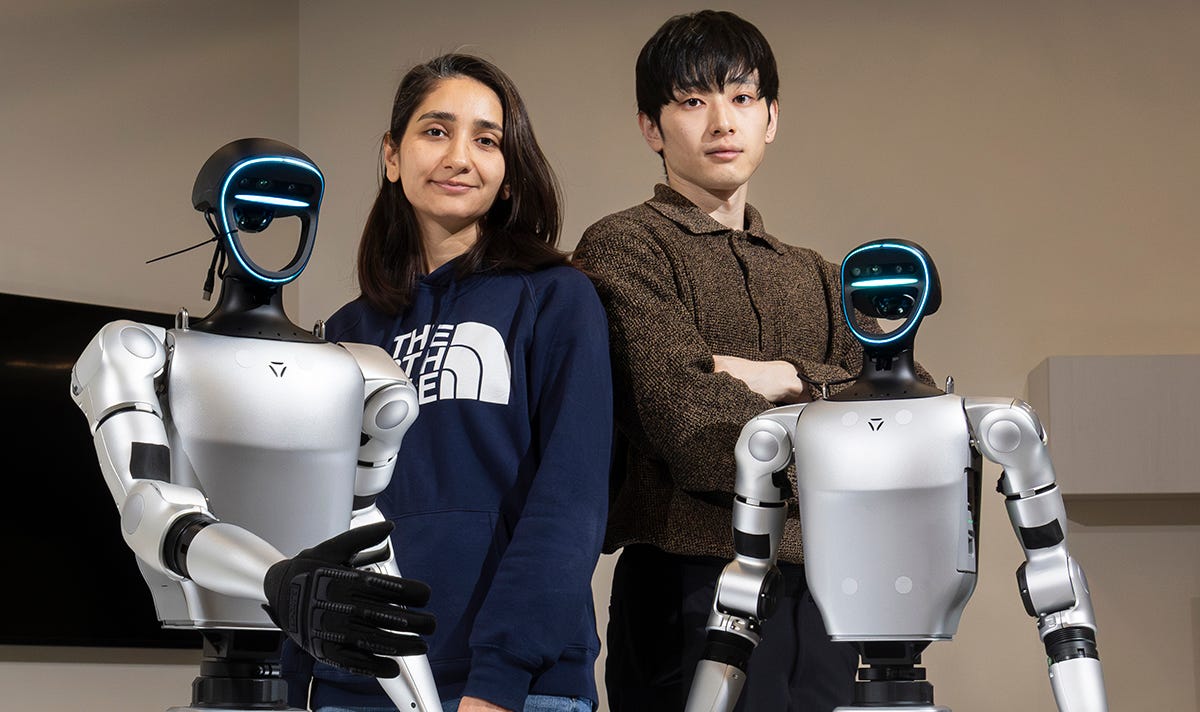
You don’t have to look far to begin to see the outline of the future in new prototype institutions that marry the knowledge of higher education with dynamic opportunities for collaboration that help the faculty, students, and organizations with whom they partner.
Rising along the banks of the Potomac River, not far from where I write, stands the new Amazon headquarters - the company’s much-anticipated HQ2. Its arrival coincided with an ambitious initiative by Virginia Tech to establish an Innovation Campus at Potomac Yard designed to complement its main campus in Blacksburg. Rather than a simple expansion, this represents a bold joint venture with one of the most innovative commercial enterprises in the country. Virginia Tech’s vision is a $1 billion, one-million-square-foot, technology-focused campus in Alexandria, Virginia, drawing heavily on the Cornell Tech campus in New York City as its model and inspiration.
Virginia Tech was not alone for long. George Mason University soon announced its own plans to develop an advanced computing degree program in Arlington, extending the reach of its existing Fairfax campus into the heart of the region’s growing tech corridor. Binding these efforts together is the Northern Virginia Technology Council, whose active encouragement of public-private partnerships has helped turn what might have been isolated institutional ambitions into something far greater. Taken together, what is emerging along this stretch of Northern Virginia is something many observers are already calling a glimpse into the future of higher education.
Timothy Sands, President of Virginia Tech, speaking at the ribbon cutting for the Virginia Tech Innovation Campus (2/28/26), noted the obvious: Virginia Tech is now embedded in the growing concentration of talent, businesses, and opportunities located near Amazon HQ2 and National Landing, a place where we could build lasting relationships with partners across government and industry. Sands stressed that this campus, at this premier location, would alter the face of what he called the innovation economy in the Washington, DC region, a place with an incredible concentration of talent.
It shows that higher education is moving toward a networked, public‑private, regionally embedded model, closely integrated with major employers and tech economies rather than running as isolated, campus‑bound institutions. The Virginia Tech Innovation Campus is a bold joint venture with Amazon, signaling a shift toward co-designed programs and infrastructure with large corporations. It also shows that coordinated partnerships, not solo campuses, are the future of higher education. This may serve as a glimpse into the future of higher education, but it will take a new type of university president to make it work.
A useful guide for the way we pick and support future leaders is the CEO Genome Project - a 10-year study drawing on assessments of over 17,000 C-suite executives. It is the most compelling empirical resource for structuring leadership development in the future. They found that high-performing CEOs do not stand out for making great decisions all the time; they stand out for being more decisive, making decisions earlier, faster, and with greater conviction, even amid ambiguity and incomplete information. In their data, people described as decisive were 12 times more likely to be high-performing CEOs.
The CEO Genome finding that the highest-IQ executives struggle most with decisiveness maps almost perfectly onto the university president profile - highly educated, intellectually complex, trained to consider all perspectives. Some executives with the highest IQs were the ones who often struggled most with decisiveness - they looked at almost too much complexity and ended up bottlenecking organizations. One author characterized the most successful leaders as having the ability to
· Decide with conviction and speed
· Practice relentless reliability
· Master relationships
· Adapting proactively to changing circumstances.
Redefining the University Leader
The American Council on Education (ACE) has long served as a touchstone for leadership development in American higher education. Its flagship offerings - the ACE Fellows Program and the Harvard Seminar for New Presidents - represent two distinct but complementary approaches to preparing the leaders who run our colleges, universities, and academic health systems.
The Fellows Program is a long-horizon investment: a pipeline for aspiring senior executives who shadow presidents, engage with institutional strategy, and develop the budgetary and political fluency that executive leadership demands. The Harvard Seminar takes a different approach — an intensive immersion for newly appointed presidents who need rapid orientation to the realities of the role. Alumni consistently point to the peer networks forged there as among the program’s most enduring returns.
Both programs have traditionally emphasized decision-making, strategic thinking, and the stewardship of institutional culture. These remain essential. But the landscape has shifted. Recent ACE surveys and briefings reveal a sharp rise in attention to policy volatility, regulatory pressure, and the kind of real-time judgment calls that arise when precedent offers no reliable guidance. Premature presidential departures are climbing, and the reasons are instructive: leaders are being tested not by the known challenges of the role, but by an environment of compounding uncertainty that no succession plan fully anticipates.
This is the defining condition of contemporary institutional leadership. The old model - the symbolic president as embodiment of institutional continuity - is giving way to something more complex and consequential. The next generation of university presidents and academic health system CEOs will need to function less as stewards of tradition and more as architects of organizational resilience. Their charge will not simply be to manage institutions, but to reimagine them - threading together financial sustainability, political legitimacy, and professional culture under conditions where the rules are changing faster than the playbooks.
That is a different kind of leader, and it requires a different kind of preparation.
[1] Mintzberg, H. (1979). The structuring of organizations: A synthesis of the research. Prentice Hall.