
Immersive Learning
Better models for better learning

I will ruefully acknowledge that Organic Chemistry launched my naval career. Perhaps a better way to phrase it is, “My lack of knowledge and comprehension of organic chemistry forced me to explore other options.” I was nominally enrolled in a pre-pharmacy track in college and faced the challenge of learning the first of what would be a series of science fields required to enter pharmacy school. It began with mastering organic chemistry, and I quickly discovered that I could not visualize chemical molecules.

Organic chemistry introduces entirely new structures, reactions, and terminology, which differ significantly from those in general chemistry. Students must grasp functional groups, mechanisms, and theories simultaneously, overwhelming those without prior exposure. That was me, overwhelmed! Added to that lack of exposure, I quickly discovered that I was not a visual learner.
Studies show that only about 10–15% of learners are primarily visual learners. I envied them. I was in the much broader group of multimodal learners who learn from a combination of visual, auditory, and reading. Unfortunately, chemistry professors apparently never read those studies. They demanded that you learn the structure of three-dimensional structures and the way they interact in the body using crude two-dimensional visual aids. The slides, books, and articles would begin with, if you could visualize this in space, this is what a molecule would look like. It was at that point that my mind would freeze up. Learning organic chemistry challenges many students (including me) due to its unique demands compared to other sciences. It requires shifting from rote memorization to deep conceptual understanding and visualization skills.
I never made it to Organic II. My fate was to enter the Navy and learn about the importance of caregiving before returning four years later with wisdom, determination, and perspective. Unfortunately, the instructional methods had not improved much, but thanks to the encouragement of my wife and her sage wisdom on how instructors constructed tests, I made it through organic chemistry and moved on to Organic Chemistry II, Biochemistry, Medicinal Chemistry, and Physical Pharmacy. Eventually strength of character conquered molecular modeling without the aid of instructional technology!
Learning the new way
Virtual reality (VR) has significantly transformed how molecular structures are taught in chemistry education over the past decade.
The most fundamental shift has been moving from static 2D diagrams on paper or screens to interactive and visual approaches that enable students to visualize molecular structures, chemical reactions, and laboratory procedures. Students can now manipulate and rotate molecules in three-dimensional space, which addresses the longstanding challenge of teaching 3D concepts through 2D media.
VR has created virtual laboratories where students engage with simulations of chemical reactions and the visualization of complex chemical structures. Rather than simply viewing molecular models, students can now enter immersive environments where they interact with molecules at scale, sometimes even positioning themselves inside chemical reactions to see particles and processes from entirely new perspectives.
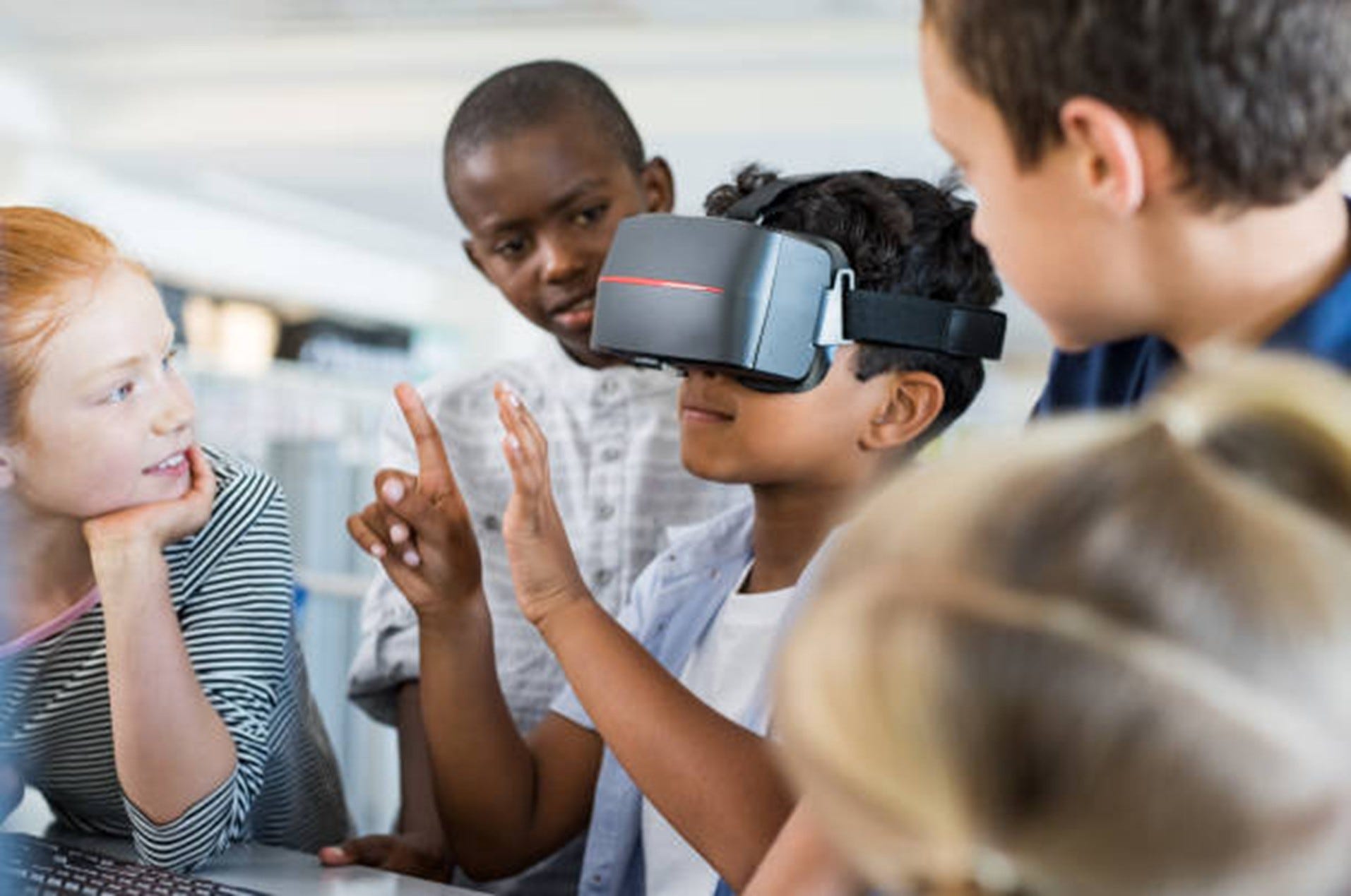
I watched my ten-year-old grandson over the holidays don his HoloLens© headset and spend hours interacting with other players in a virtual landscape. He was very active as he whirled and engaged with the avatars of other players using hand gestures and controllers. Modern virtual reality (VR) and augmented reality (AR) tools allow students to physically interact with molecular structures in much the same way.
Applications like NuPOV (Nucleophile’s New Point of View) enable users to not only view chemistry concepts in augmented reality (AR) on a handheld device (e.g., iPhone) but also interact with them for individualized, self-directed learning. NuPOV is often operationalized through tools such as virtual reality (VR), augmented reality (AR), mixed reality, and AI-driven simulations. This tactile element helps bridge the gap between abstract concepts and tangible understanding.
The transformation hasn’t replaced traditional teaching methods entirely. VR typically supplements lectures and lab work rather than replacing them. However, it has added a powerful new dimension to chemistry education that makes abstract molecular concepts more concrete and engaging. All of this is a relatively recent development that has largely occurred over the past decade, but is rapidly growing in the K-12 education and in selected applications in higher education. The inference is that this is the early state of what may be a revolution in learning strategies that will have major implications for leaders in higher education who must prepare their faculty for these changes and lead in the development of the new strategies.
The Dawn of a Digital Campus: How AI and VR Could Reshape Higher Education
In an era where nearly 98% of universities offer online programs and student demand for hybrid learning continues to surge, the landscape of higher education is undergoing a profound transformation. The rapid growth of hybrid models - blending in-person and online experience - has laid the groundwork for even more immersive technologies. Artificial intelligence (AI) and virtual reality (VR) are poised to replace key aspects of traditional higher education, from lectures and labs to personalized tutoring and collaborative projects. These tools promise greater accessibility, deeper engagement, and cost-effective scaling, potentially democratizing elite-level education while addressing rising tuition and enrollment challenges.
The foundation is already strong: As of 2025, over 90% of college students use AI tools academically, with adoption rates jumping dramatically in recent years. Meanwhile, the VR in education market is exploding, projected to grow from around $17 billion in 2024 to $65 billion by 2032. Hybrid education, accelerated by the pandemic, has become the norm, with markets for online higher education valued in the tens to hundreds of billions and growing at double-digit rates annually. This trajectory suggests that AI-driven personalization and VR-powered immersion could begin supplanting traditional classrooms, labs, and even campus social experiences within the next 10–15 years—by the mid-2030s to early 2040s.
In this post, we’ll explore the compelling reasons behind this shift, from enhanced learning outcomes to economic pressures, and examine the evidence pointing to when these changes might fully materialize.
Advantages and disadvantages of immersive learning
Immersive learning offers several notable advantages over traditional lecture-based instruction in higher education:
Deeper engagement and retention - When students actively take part in simulations, they virtually remember material longer and understand it more thoroughly. The experiential nature creates stronger neural connections.
Safe practice of high-stakes skills - Students can make mistakes and learn from them without real-world consequences. Medical students can practice surgeries, business students can navigate corporate crises, and education majors can manage challenging classroom scenarios, all in controlled environments where failure becomes a learning tool rather than a disaster. In the past, we approximated this strategy by using Objective Structured Clinical Exams (OSCEs) using live actors and standardized scripts to assess the ability of pharmacy students to make accurate assessments of clinical problems and suggest solutions in a time-limited environment.
Development of practical competencies - Immersive approaches bridge the gap between knowing and doing. Students don’t just learn about conflict resolution or project management; they actually resolve conflicts and manage projects, developing the judgment and intuition that comes only through practice. This was the goal of Competency-based Education and may finally be within reach with immersive learning.
Increased motivation and emotional connection - The interactive, often story-driven nature of immersive learning tends to be inherently more engaging than textbooks or lectures. When students feel emotionally invested in a scenario or problem, their intrinsic motivation increases. A generation of digital natives, like my grandson, is used to engaging scenarios and thrives on them in an immersive learning environment.
Accommodation of different learning styles - While traditional instruction often favors auditory and reading-based learners, immersive environments can incorporate visual, kinesthetic, and social learning elements simultaneously, making education more accessible to diverse learners.
Real-time feedback and adaptation - Many immersive technologies and approaches allow for immediate feedback on decisions and actions, helping students correct quickly rather than discovering errors weeks later in an exam. This is perhaps the most important aspect: the utilization of an artificial intelligence chatbot that picks up where you left off the last time you entered the immersive learning environment and moves you from simple to more complex concepts with a variety of tools that are not typically used in the traditional classroom.
That said, immersive learning works best when thoughtfully integrated with traditional methods rather than completely replacing them. Foundational knowledge often still requires direct instruction, and not all learning objectives benefit equally from immersive approaches. If immersive education—powered by virtual reality (VR), augmented reality (AR), and metaverse platforms—becomes the dominant model in higher education, college campuses would undergo a profound transformation, blending physical spaces with vast digital twins and fully virtual environments. Here are a few of the changes that leaders in higher education will need to face.
Physical Campuses Become Hybrid Hubs
Traditional brick-and-mortar campuses wouldn’t vanish entirely but would evolve into hybrid hubs focused on social interaction, hands-on labs, events, and experiences hard to replicate digitally (e.g., sports, performing arts, or collaborative maker spaces). Many buildings might become empty shells. a silent testimony to earlier instructional methods.
Large Lecture halls will be divided into smaller learning spaces or converted into VR/AR labs where students don headsets for immersive classes.
Libraries and dorms will increasingly become irrelevant. Those that remain will be equipped with high-speed internet, charging stations, and communal VR lounges for group immersion. Dorms may be occupied infrequently for those times when the student must take part in hands-on laboratories or for personal interaction with faculty and students. Dorms that still exist will be more like executive suites or short-stay motels. Physical attendance becomes optional for many courses, reducing overcrowding and environmental impact, while emphasizing in-person for community-building.
Money that was once poured into dormitories, cafeterias, classrooms, and support facilities will now be earmarked for an alternative type of infrastructure. Headsets (e.g., Meta Quest or Apple Vision Pro) and supporting hardware remain expensive, often costing hundreds to thousands per unit, but they can be stored on campus for hybrid education (part immersive and part physical). Just as we rented laptops to our pharmacy students so that they could be updated when new applications became available, so too must institutions anticipate that rapid advancement in both AI and VR will make existing technology obsolete quickly. Institutions face added expenses for software licenses, content development, and high-bandwidth internet.
Not all students will have equal access to devices or reliable internet, worsening inequities based on socioeconomic status, geography, or disabilities. Inclusive design for diverse needs (e.g., motion impairments) is often lacking, widening gaps in educational opportunities. The flip side, however, is that students in this country and abroad who previously were geographically isolated can now be afforded the same educational opportunities enjoyed by those in the exclusive neighborhoods in the large cities of the United States. We may see true educational opportunities regardless of social status or physical location.
Existing educational VR/AR content is often fragmented, entertainment-focused, or misaligned with curricula. Creating custom and evidence-based materials is resource-intensive, and many educators lack training in how to create immersive learning environments or competency-based assessments. This may mean that increasingly immersive learning materials will be created by development laboratories outside the traditional learning environment, with the risks of further commercialization of education. There are those that would argue that higher education is already run like a business, albeit a poorly run one.
It is this characteristic that is particularly troubling when you visualize a learning landscape where the content is developed by content factories for use in the classroom, relegating teachers and professors to a role as facilitators. That occurred during the pandemic, where education reverted to course packages that were not developed by the teacher in the classroom and were poorly utilized. Lack of ownership and pride meant that the teacher accepted whatever content was available, even if the strategies were poorly understood or the teacher disagreed with the strategy.
For higher education, the changes may be even more challenging. The traditional higher education business model—largely reliant on tuition revenue, full-degree programs, physical campuses, and amenities like athletics and research facilities—faces severe strain from multiple converging pressures. Declining enrollments, driven by demographic shifts (fewer 18-year-olds due to lower birth rates post-2008 recession), skepticism about degree value amid high costs, and competition from alternatives, have created financial unsustainability for many institutions. Public disinvestment in universities has shifted costs to students, fueling a $1.7–1.8 trillion student debt crisis, while rising operational expenses and flat revenues worsen the issue.
To adapt, higher education must fundamentally evolve toward more flexible, cost-effective, and outcome-oriented models. Key changes include
Shift from rigid four-year degrees to stackable micro credentials, certificates, short courses, and competency-based programs that allow learners to upskill quickly and affordably. The risk is that while some universities have begun to make the transition to adult education markets, many persist in competing for a shrinking post-high school market.
Leverage digital tools that were expanded during the pandemic to create scalable, low-cost education, reducing reliance on expensive physical infrastructure. This is perhaps the most difficult for higher education leaders who were raised in the era of edifice building.
Institutions like Southern New Hampshire University (SNHU), Western Governors University (WGU), University of Maryland Global Campus (UMGC), and Purdue Global exemplify success through large-scale online programs, international outreach, and a focus on adult/working learners. These have driven significant enrollment growth (e.g., SNHU and WGU reaching 170,000+ students, with expansions in traditional-age and global reach) by targeting underserved groups without heavy facility investments. They benefit from early adoption of flexible, scalable models.
Competency-based education (CBE) is gaining traction, emphasizing mastery over seat time. AI plays a growing role in assessing prior knowledge, personalizing pathways, and enabling flexible opportunities. Hybrid models blend in-person and online elements, while accelerated programs (e.g., three-year bachelor’s degrees) reduce time and cost barriers.
Development of more flexible learning opportunities that can be consumed in manageable amounts (micro-credentials) and that focus on the development of workplace knowledge and skills, emphasize a clear return on investment (ROI) and will restore public confidence, potentially regaining political support for funding.
Institutional Agility and Innovation
Many experts are skeptical that higher education has the will or the leadership to make these changes in a timely fashion. The alternative would be to cede research and development of immersive learning environments to the high technology industry. Academic institutions account for about 65% of the VR education market, which suggests that the remaining 35% comprises corporate training and other sectors. However, this data reflects who is using technology rather than who is developing it. The major developers are primarily private companies with public and private universities buying and using the technology. They no longer have a dominant position in the new immersive learning model that is developing. The major players are:
Tech giants: Microsoft, Google, Meta, Apple, Sony, Samsung, HTC
Specialized EdTech firms: zSpace, ClassVR, Nearpod, Labster, VictoryXR, Mursion
Gaming/simulation companies: Schell Games, Rezzil
Large technology companies are also the ones leading the development of Artificial Intelligence because they:
Commit significant financial resources, research, and infrastructure toward AI tools for academic use.
Form formal partnerships with large universities and education systems.
Develop the core AI models that power educational applications.
Integrate AI into mainstream productivity and learning platforms used by students and faculty.
The real question isn’t whether traditional higher education will disappear, but whether it will adapt quickly enough to integrate these technologies while still preserving their irreplaceable human elements: emotional support, ethical judgment, and critical thinking, or whether they’ll cling to outdated models until disruption becomes unavoidable. Traditionally, higher education has existed to fulfill three important needs: knowledge transfer, standardized assessments as proof of mastery of content, and a virtual monopoly on credentialing. All three will undergo rapid and, some would say, convulsive change as we enter the era of immersive learning.
Traditional universities face growing competition from alternative education providers powered by AI, including specialized courses, boot camps, and micro-credential programs, often at lower cost than conventional higher education. Some researchers go further, arguing that sophisticated AI tutors offering personalized lifelong learning is a disruptive and ultimately more effective alternative, with AI’s capacity to deliver high-quality, personalized education at scale making traditional universities increasingly redundant.
A Glimpse of the Future
In an era where nearly all universities offer online programs and student demand for hybrid learning continues to surge, the landscape of higher education is undergoing a profound transformation. Artificial intelligence (AI) and virtual reality (VR) are poised to replace key aspects of traditional higher education, from lectures and labs to personalized tutoring and collaborative projects. These tools promise greater accessibility, deeper engagement, and cost-effective scaling, potentially democratizing elite-level education while addressing rising tuition and enrollment challenges.
The foundation is strong. According to a survey conducted by Student Voice in July 2025 and published by Inside Higher Education, 85% of college students use AI tools academically, with adoption rates jumping dramatically in recent years. Meanwhile, the VR in education market is exploding, projected to grow from around $17 billion in 2024 to $65 billion by 2032. Hybrid education, accelerated by the pandemic, has become the norm, with markets for online higher education valued in the tens to hundreds of billions and growing at double-digit rates annually. Market reports from credible sources show that AI-driven personalization and VR-powered immersion could begin supplanting traditional classrooms, labs, and even campus social experiences within the next 10–15 years, by the mid-2030s to early 2040s.
Putting these strands together, the age group with the greatest potential benefit from AI–VR learning environments is adolescents and young adults (secondary school through early higher education, about 13–22). This group combines strong cognitive readiness with complex, interactive simulations, high intrinsic motivation and digital fluency, and extensive opportunities to apply AI–AR tools across subjects and into early career preparation. My grandson’s generation is already experiencing this.
Adults will benefit from AI‑supported immersive training, especially in professional and technical upskilling, where AR simulations and AI feedback can compress practice time and reduce risk. For adults, the main gains are in targeted skill acquisition and performance support rather than broad cognitive development, and benefits depend strongly on usability, clear relevance to work, and time efficiency.
The future of education is being written as you read this. In the past, as an educator, I used Christmas break to update my slides and rewrite my lectures. That process is still occurring, but it is now being written, in part, by artificial intelligence, and the finished product is being packaged for delivery by a virtual reality platform. I just hope my avatar is handsome.