
No Regrets
Leaving the Past Where It Belongs

For over a decade, I’ve poured myself into a monumental, deeply personal mission: preserving my family’s history. Before retirement, boxes upon boxes arrived at my door—fading photographs, treasured memorabilia, fragile documents—quietly passed down as elders passed on and their children sought a safe home for these irreplaceable pieces. I’d already spent years tracing genealogies and recording stories from relatives, so it was no surprise when I emerged as the unofficial heir to my aunt’s encyclopedic memory of names, dates, lineages, and vivid tales,
One evening crystallized it all. While in pharmacy school, I visited my grandmother over Christmas Break. She lived with my beloved uncle, and they were the brightest lights in my world. Her cousin and aunt joined us after dinner, and the stories flowed freely. To capture the details, I scribbled notes, then as I struggled to keep up, I pulled out a cassette tape: a dull pharmacology lecture. I hit record, overwriting it with something infinitely richer—laughter, voices, and the living pulse of our family history.
Many of us have felt that quiet handover: the moment oral tradition transfers across generations. My role grew, and so did the collection. Today, one room in my home is affectionately dubbed the family archives.
Now, 3,668 scanned images deep into this painstaking labor, I’ve digitized the oldest and most vulnerable treasures first - including a family Bible from around 1800, inscribed by my distant ancestor Sarah McKay. I’ve moved through my grandparents’ and parents’ eras, and now I’m entering my own: photos and letters from colleagues, siblings, cousins, children, and now grandchildren.
What began as a disciplined effort to prioritize speed over sentiment has become something far more powerful. Each image pulls me backward, forcing me to confront my childhood, my youth, moments frozen in time that I once lived without foresight. From the vantage of today - the future I could barely imagine then - these snapshots hit differently. They sober me. They stir me. They remind me how memories are never simple or forgotten.
It’s a complex, sometimes aching journey: reliving what was, through eyes that now know what came after. And in that tension lies the true weight—and wonder—of being the keeper of these stories.
The Weight You Carry
Memory is a gift. The capacity to learn from experience, to hold onto love, to carry the faces of people who mattered - this is one of the most remarkable things about being human. But memory, like most powerful things, has a shadow. And that shadow is what happens when we stop drawing on the past and start living inside it. You return again and again to some disturbing event or experience, and it colors future relationships.
I had a sometimes-turbulent relationship with my father. I never fully understood why we disagreed on almost everything of substance. When I was five years old, he accepted a job on a construction site in Saudi Arabia. One of the items in my collection is a heavily laminated picture of me as a bright, inquisitive five-year-old boy that he apparently carried with him to the desert outpost where he worked.
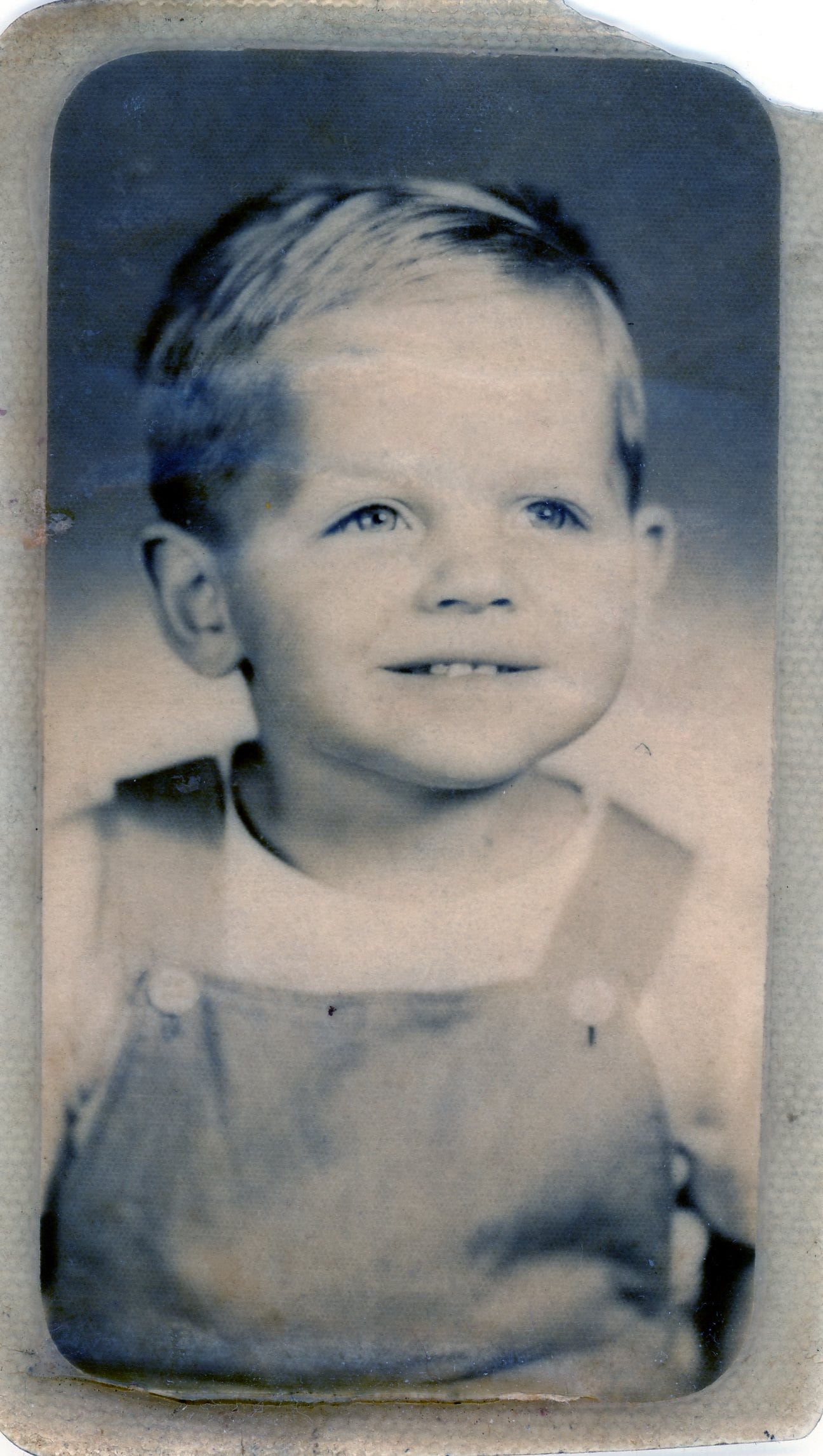
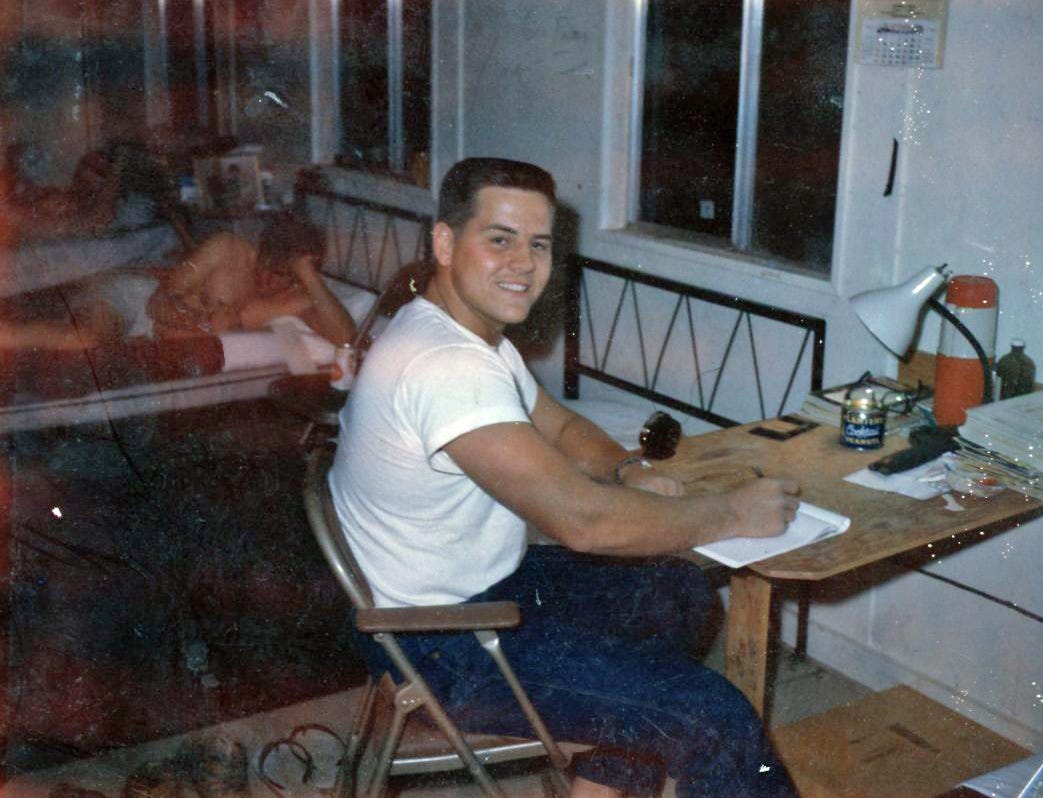
He was absent from my life for 18 months, returning when I was six and a half. In his absence, my mother turned to me for support, running errands, caring for my younger brother, and, essentially, helping her run our household. I went through a critical phase in my development without a father guiding me. When he returned and resumed his role as head-of-the-household, I resented him for dismissing my contributions and, more importantly, punishing me when I showed independence. His way to re-establish his role was to punish me severely when I disagreed with his decisions. This was the environment I lived in for the next 11 years. Eventually, it became obvious that we could not remain in the same household, and at the age of 18 and five days, I boarded a Military Air Transport Service (MATS) C-130 and left home for a construction job on Ascension Island, a remote 32-square-mile volcano tip sticking out of the Atlantic Ocean halfway between Brazil and the Horn of Africa. A grizzly group of construction workers and I were charged with creating a downrange tracking station that NASA needed for the Apollo Mission. For the next seven months, I worked on a construction job, ten hours a day, seven days a week. While I would return home briefly after my return from Ascension, I was now on my own. I had many memories from that adventure, but the most important ones were the feeling of independence and confidence that working tirelessly to accomplish an important goal gave me.
Years later, I was advising a pharmacy student concerning a troubled relationship she had growing up with a stepfather, and in the middle of my relating my past experiences, she interjected the following. Is your father still alive? No. Then essentially, you are still trying to please a dead man! It was a strong dose of reality. The words landed like cold water. In that instant, I saw it clearly: all those years I had been quietly replaying the same old script, chasing an impossible revision of the past, still performing for an audience that had long since left the theater. The hope had been faint, but stubborn—and utterly futile. Some memories are better left in the past, where they belong.
Psychologists sometimes call this temporal displacement - a state in which the emotional reality of a past event bleeds forward into the present, coloring perception long after the event itself has ended. You don’t just remember fighting with your father; you enter every new relationship half-expecting confrontation. You don’t just recall feeling like a failure; you preemptively brace for the shame of failing again before you’ve even begun. The memory becomes a lens, and every new thing you see gets distorted by it.
The danger is subtle precisely because it disguises itself as wisdom. We tell ourselves we’re realistic, careful, measured. We’ve learned from experience, haven’t we? Shouldn’t that count for something? And yes - it should. But there is a crucial difference between wisdom and vigilance, between learning and haunting. Wisdom says: I know what pain can look like, so I’ll pay attention. Haunting says: I know how this ends, so why bother starting?
The real cost is harder to see than the obvious ones. Of course, dragging old wounds into new relationships strains those relationships. Of course, replaying old failures makes new attempts feel more challenging than they should. But there is a subtler toll: the way it erodes your relationship with the present moment itself. When you’re perpetually dragging the past forward, you are never quite here. You are always somewhere between then and now, in a liminal space of your own construction, only half-available to whatever is actually happening in front of you.
This is the real tragedy - not the pain of the past, which was real and deserves acknowledgment, but the way that pain gets granted an endless lease on a future it was never meant to inhabit. The original wound closes: what doesn’t close is the mental habit of returning to it, of letting it narrate new situations that have nothing to do with the old one.
The past is real. But it is not a sentence. You can learn from it without being ruled by it - and that distinction may be the beginning of a new reality.
Captives of our past. Rick Warren, Pastor of the Saddleback Church and motivational speaker, observed, We are products of our past, but we don’t have to be prisoners of it.
If you follow the stock market, you will inevitably see the boilerplate disclaimer at the bottom of an offering, Past performance is no guarantee of future results. This is wise advice not only for investors but for those who are reliving the past. Leaders have bad experiences, probably more than the average population, because they take more chances. They learn to process all experiences, but especially the ones that turn out badly, so that they can learn from them.
They reflect intentionally. Strong leaders don’t just have experiences - they process them. Journaling, debriefs, or even quiet thinking after significant events help cement lessons. Lincoln famously wrote letters he never sent, just to work through difficult moments. The act of articulating what happened and why strengthens memory and extracts meaning.
They reframe failure without erasing it. Rather than suppressing painful memories or obsessing over them, effective leaders practice what psychologists call post-traumatic growth - integrating hard experiences into a narrative of resilience. They ask what I can learn from this experience. Rather than why did this happen to me? One of my father’s favorite admonitions was that we were all the victims of the fickle finger of fate, and you knew to which finger he was referring.
Leaders learn from history. Great leaders don’t only draw on their own experience. They absorb the lessons of history, mentors, and those around them - effectively expanding their memory bank beyond what they’ve personally lived. This is why voracious reading is so common among effective leaders. One of my favorite quotations is Those who cannot remember the past are condemned to repeat it attributed to George Santayana. There are many variations of this observation, but it essentially advises leaders to learn from not only their mistakes but from others as well. The past is real, but it is not a sentence. You can learn from it without being ruled by it - and that distinction may be the beginning of everything.
Rising Stronger: Learning from Failures Without Dimming Your Ability to Lead
As leaders, we’re often painted as unbreakable pillars of strength - visionaries who charge forward with unyielding confidence. But the truth is, every great leader has a trail of disappointments and failures behind them. I recently finished reading Walter Isaacson’s biography of Elon Musk.[1] I was struck by the similarities between his childhood and mine. He struggled to find himself and separate from a domineering father. He succeeded, and he talks often about how that painful separation motivated him to lead more innovative endeavors than almost anyone in history. Think of Steve Jobs, who was orphaned at an early age, being ousted from Apple, only to return and revolutionize the tech world, or Oprah Winfrey overcoming early career setbacks to build a media empire. The real test isn’t avoiding failure; it’s learning from it while keeping your ability to inspire others intact.
Embrace Failure as a Teacher, Not a Tormentor. The first step in learning from disappointments is shifting your mindset. Failures aren’t personal indictments; they’re observable events in your life story. When a project flops or a decision backfires, dissect it objectively. Ask yourself: What went wrong? What external factors played a role? What could I have done differently?
But here’s the key: don’t dwell on the autopsy. Prolonged examination can breed self-doubt, which seeps into your leadership style. Instead, treat it like an after-action report - analyze, learn, and move on. This approach keeps your energy focused on the future, preserving the optimism that inspires your team.
Separate Your Identity from the Outcome. One of the biggest traps for leaders is tying their self-worth to success. When you fail, it can feel like a blow to your core identity, making it hard to rally others with genuine enthusiasm. To avoid this, practice self-compassion. Recognize that you’re human, and even the best leaders falter. Be kind to yourself. I am drawn back to Desiderata and to the passage that goes, Nuture strength of spirit to shield you in sudden misfortune. But do not distress yourself with dark imaginings. Many fears are born out of fatigue and loneliness.
Techniques like journaling can help. Write down three things you did well despite the failure and one key takeaway. This reinforces that your value as a leader isn’t defined by one event. Over time, this detachment allows you to lead with authenticity- your team sees a real person who’s battled through tough times, which can be incredibly inspiring.
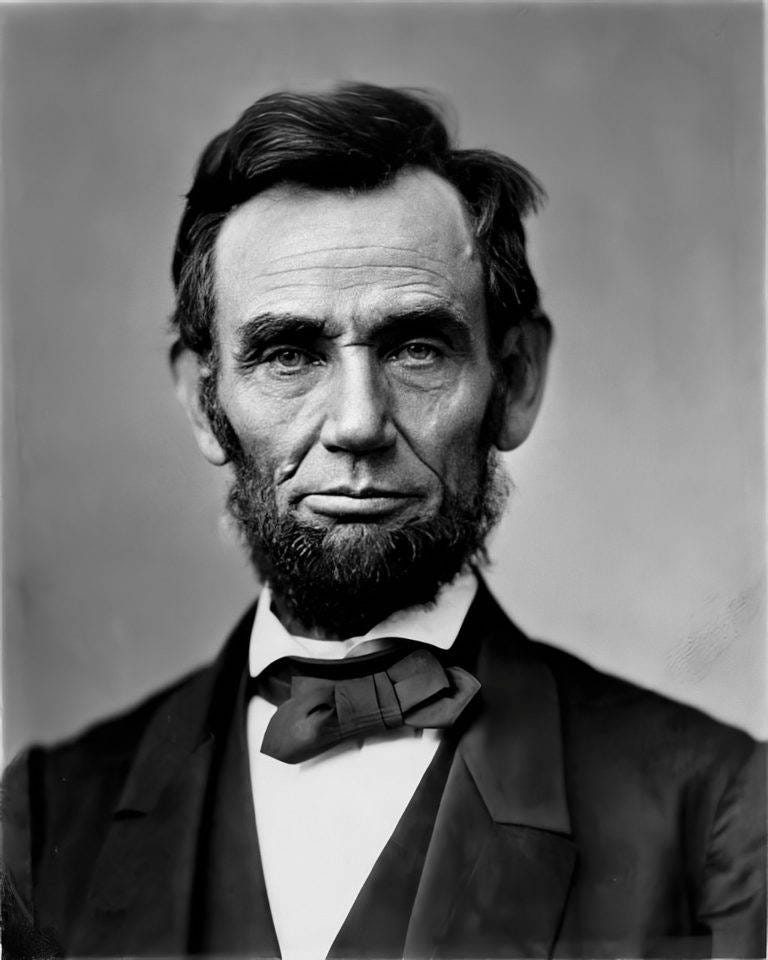
Abraham Lincoln was facing the worst of times, and the nation was beginning to doubt his leadership when he gave perhaps the most self-reflective and impactful addresses of all time. I used his Gettysburg Address to impress upon my students that leaders are human; they feel pain, and they struggle with self-doubt, but they rise above it.
Crafting a New Reality: Don’t leave your failures in the past before you’ve gotten everything you can from them. Do the work: name them, sort them, extract the principle, and close the loop deliberately. Then - and only then - move forward. Too many individuals never fully examine painful experiences; they try to bury them, and then, when they surface, they become their prisoners. They relive it in every new experience they have and, unfortunately, it diverts energy and thinking into non-productive activities.
Accept Uncertainty. Many leadership mistakes happen because decisions have to be made with incomplete information under pressure. Leaders who understand this don’t hold themselves to an impossible standard of perfect hindsight. They judge past decisions by what they knew then, not what they know now. I would often scold my leadership team when they were complaining about not having enough information to make a good decision. I would remind them to focus on what they could control and not to waste time on things (e.g., events, people, politics) that were outside their control.
Leaders who do well in periods of uncertainty tend to have developed sufficient self-awareness to notice when their hesitation is situationally appropriate rather than emotionally driven. Therapy, good coaching, and trusted people who will tell them the truth all play a role. The goal isn’t to erase the experience but to loosen its grip on present judgment - to be informed by history without being imprisoned by it.
The family archives room stands as a symbol of a past worth preserving. Safeguarding memory is an act of love and reverence; yet to live inside those memories is a quieter kind of loss. Whether you are a leader reckoning with the consequences of a failed decision, a grown child still waiting for the approval of a parent long gone, or simply a person carrying the ache of old wounds, the invitation is the same: visit the memory, absorb its lesson, and then gently return it to its proper place - behind you.
You are shaped by all that has come before, but you are not confined by it. The present moment - alive with possibility and the promise of new memory - asks for your undivided attention.
[1] Walter Isaacson’s biography of Elon Musk is a comprehensive, authorized account titled Elon Musk. Published by Simon & Schuster on September 12, 2023.
Very well said. I recall reading once that Art Linkletter grew up in an orphanage -- something that could leave anyone feeling worthless and resentful. But he's the one that for years had the show, "Kids Say The Darndest Things," that made everyone laugh at the innocent humor, including himself. We all start from today, and the recommendations you make here of how to deal with yesterday are valuable.
I feel my best leadership has come in times of uncertainty. Instincts kick in and it’s easier to pivot versus second guessing myself. Perhaps a strong mentor instilled in me to trust myself…
Alternatively- given time tends to make us second guess ourselves because we do carry those ghosts - good or bad. I have felt where I lose my sense to act instinctively… perhaps after today I will remind myself that I have been well prepared by some great leaders and mentors and that I can trust myself more by not letting the past get to me more consciously.