
Sound and Fury
Communicating in a Chaotic World

Life is a tale told by an idiot, full of sound and fury, signifying nothing
William Shakespeare - Macbeth
Communicating in a Chaotic World
Shakespeare took a bleak perspective on the relationship between chaos and communication, but there is no doubt that he could have been talking about the sound and fury of the age in which we are living. The current literature is filled with references to how chaotic things have become. Whether because of politics, economics, or transformative technology, we are experiencing a pace of change that frequently appears out of control and unplanned. I am reminded of a quotation attributed to Sun Tzu in The Art of War that observes In the midst of chaos, there is also opportunity. Finding that opportunity is the role of leaders. But once they see it, they must communicate it effectively to their team or organization. Leaders must communicate clearly and effectively if they are to instill confidence and convey a sense of hope and direction to their followers. This is a simple statement but with a complex meaning.

An effective communication strategy consists of four personal skills: observation, contemplation, listening, and presentation.
· Observation - I have remarked frequently about the need to be an observant leader. I am an introvert. Observation is one of the unique character traits of introverts that is frequently misunderstood by other, more extroverted individuals. Introverts observe, listen, and speak only after they understand the dynamics of the situation. They combine spoken words (context and content) with non-verbal clues to develop a deep understanding of the speaker and the message. This often results in an astonishingly accurate assessment of a situation, one that is often missed by others. Observation takes patience, energy, and keen observation skills, but results in a better understanding of the issue at hand.
· Contemplation - Leaders need time for contemplation and meditation. They can generally deal with the chaos that pounds on their door, but they must have time to reflect and formulate an effective communication strategy. Leaders need to be about themselves sometimes, and the welfare of their team.
One great leader who experienced a lot of chaos during their life was Abraham Lincoln. He was a very quiet and introspective individual who spent time each day in prayer, contemplation, and reflection on the often-chaotic events surrounding his presidency. Author Henry Adams called him a quiet, peaceful, shy figure. But those who thought Lincoln’s understated manner signaled weakness in the man found themselves terribly mistaken, to the scale of 250,000 Confederate and 360,000 Union lives, including Lincoln’s own. Lincoln’s fierce resolve was fueled by his observations about the cost of slavery and the huge human costs associated with the Civil War.
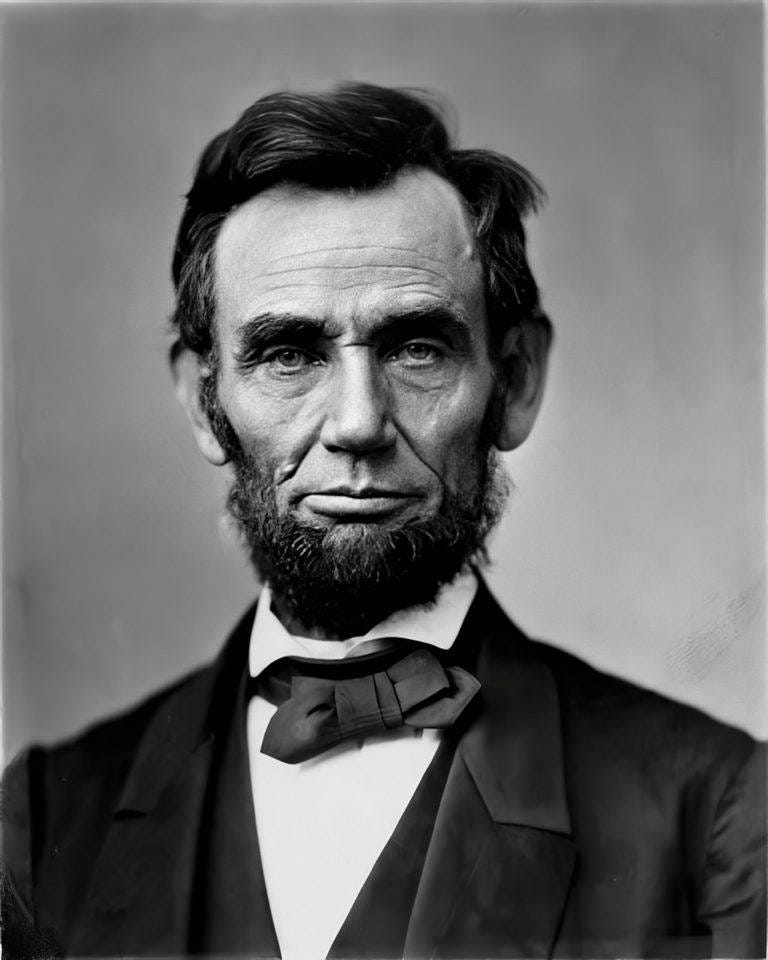
The Gettysburg Address was a powerful and masterful articulation of the underlying principles at stake and appealed to a sense of shared purpose, even amidst profound division. He used his observations on the field of battle to note the sacrifices made and reminded the audience of the ideals behind the nation's founding. His short address conveyed a message that sought to unite a fractured country around a common vision of freedom and equality.
I have shared his address frequently with my students as a way of reminding them of the power of communication in periods of chaos.
Gettysburg Address
November 19, 1863
Battle of Gettysburg, July 1 – 3,1863
Four score and seven years ago, our fathers brought forth on this continent a new nation, conceived in Liberty, and dedicated to the proposition that all men are created equal.
Now we are engaged in a great civil war, testing whether that nation, or any nation, so conceived and so dedicated, can long endure. We are met on a great battlefield of that war. We have come to dedicate a portion of that field as a final resting place for those who here gave their lives that that nation might live. It is altogether fitting and proper that we should do this.
But, in a larger sense, we can not dedicate -- we can not consecrate -- we can not hallow -- this ground. The brave men, living and dead, who struggled here, have consecrated it, far above our poor power to add or detract. The world will little note, nor long remember what we say here, but it can never forget what they did here. It is for us the living, rather, to be dedicated here to the unfinished work which they who fought here have thus far so nobly advanced. It is rather for us to be here dedicated to the great task remaining before us -- that from these honored dead we take increased devotion to that cause for which they gave the last full measure of devotion -- that we here highly resolve that these dead shall not have died in vain -- that this nation, under God, shall have a new birth of freedom -- and that government of the people, by the people, for the people, shall not perish from the earth.
At the Gettysburg Address ceremony, Lincoln's short, impactful speech was a stark contrast to the lengthy oration of the day's main speaker, Edward Everett. Everett's two-hour speech was a traditional, detailed account of the battle, and its significance has long been forgotten. Lincoln's address, in just 272 words, focused on the war's purpose and a new vision for the nation. It was powerful and rededicated the audience and nation to the chaos that lay ahead and the sacrifices that would be required to bring the conflict to a close - a masterpiece of effective communication.
· Listening - Another critical element of effective communication is listening. Listening is more than just hearing spoken words. It is about putting effort into understanding what is being said, both spoken and unspoken. The spoken part involves active listening – minimizing distractions, making good eye contact, and being mindful of your own thoughts. Too often, we fall into the trap of thinking of our response before fully hearing the other members of the conversation out. I am reminded of the first paragraph of Desiderata that goes, go placidly amid the noise and haste, and remember what peace there may be in silence. As far as possible without surrender, be on good terms with all persons. Speak your truth quietly and clearly, and listen to others, even the dull and ignorant; they, too, have their story.
Two key parts of that phrase are silence and listening to others. Most people avoid silence, particularly during a conversation. When asked by researchers what a comfortable pause in a typical conversation would be, 4-5 seconds is the general response. Anything longer and the temptation is to simply say something, even if it is irrelevant. That can be an advantage, particularly to introverts, since they are more comfortable with pauses while they process what is being said. It seems like an eternity to those from the more extroverted end of the spectrum. Allowing for pauses in the conversation and resisting the temptation to speak excessively are skills that effective communicators learn to utilize.
Listening also involves listening from the heart. Often, people place too much emphasis on what is being said and are not as attentive to what is not being said. Because of fear of rejection, lack of confidence in the person who is listening, or simply reluctance to share too much, speakers often leave out key elements of the conversation. When you listen from the heart, you are attentive to loss of eye contact, nervous hand movements, and hesitancy. The effective communicator knows to watch for these tells and to respond appropriately. I have been engaged in more than one conversation when I asked how the individual was doing, and knew from their response that things were not good. It then became incumbent on me to gently probe for more specifics. Eventually, they would open up about health issues, family problems, or simply outline a fear about the proposed course of action. Listening from the heart involves peeling back the outer layers of an individual's concerns and carefully exploring them if they are willing, letting them know that it is safe to voice their true feelings.
· Presentation – This is what most individuals think of when they are asked about effective communication. It is important, but in sometimes subtle ways.
A presentation, whether in a small group or to a large audience, begins with clarity of thought. This relates to the contemplation and mediation phase I mentioned earlier. Leaders need time to consider situations, events, and individuals before verbalizing. Clarity of thought is seldom achieved on the fly. Leaders must be able to articulate their vision, goals, and expectations in a way that is easily understood by everyone. Mastery of language and a good vocabulary help, but can often become a barrier to effective communication. Different situations and audiences require different communication strategies. Effective leaders are flexible and can adjust their communication strategies to suit the content and context of the presentation. Regardless of the type of meeting, individual conversations, small group meetings, or a large audience, the leader adjusts to achieve the desired outcome.
Reading the audience - If you are asked to make a more formal presentation, the effective communicator must prepare adequately and learn to read the room. Arrive early and listen to introductions. Learn something about the audience and, if possible, incorporate what you hear and observe into the introductory phase of your presentation.
You should also be aware of timing and pacing. Timing is starting on time and finishing the presentation with time for questions or dialogue with the audience. Pacing is accounting for mental processing by the audience and is crucial for audience understanding. Moving too fast early in the presentation because of nervousness or rushing at the end of a presentation because of a lack of time is typical and should be avoided. I always required students in my class to make a formal presentation. It was an opportunity for them to practice public speaking in front of a friendly audience, and it provided me with an opportunity to coach them in the finer points of making a professional presentation, something that would become part of their professional life upon graduation.
I once had a student who was so nervous as they prepared for their fifteen-minute presentation that they almost passed out at the podium. I recognized the signs of someone who was under duress and about to lose consciousness. I walked to the podium, engaged them in quiet conversation about the slides they were about to utilize, and then, under my breath and away from the microphone, I whispered –Breathe. They paused, took a deep breath, and began their presentation, one that they delivered flawlessly.
Reading the room is also important for engaging the audience and receiving feedback. Making eye contact strategically is an important demonstration of this skill. I would typically use an arc of eye contact strategy with an audience. I would pick out individuals on the far left and right of the audience, and someone near the center back to make regular eye contact with. I would not ignore the rest of the audience, but scanning from left to right and back again engaged everyone.
I once had a student ask me after a lecture if I made eye contact with everyone in the audience. I shared my strategy, and the next time I lectured, he positioned himself in the center front, thinking it would render him invisible. I made a point of making regular eye contact with him in his new location to ensure he was engaged.
Preparation is more than having a good set of PowerPoint© slides. Effective communicators know that slides supplement the spoken word; they don’t substitute for it. I have attended many, many professional presentations and have noted that the more experienced the speaker, the fewer the number of slides. The most effective presentations generally involved 1-2 slides per minute (exclusive of title slides) or approximately 10 – 15 slides for an average 20 – 30-minute presentation. A typical Technology, Entertainment and Design (TED) talk lasts 18 minutes, and the speakers utilize very few slides. They share their passion for their work and illustrate it with often very personal stories.
Storytelling - One strategy that is often overlooked is storytelling. Richard Branson, a renowned British entrepreneur and adventurer, founder of the Virgin Group, was fond of saying, The art of storytelling can be used to drive change. It seems ironic that during periods of transition, people relate better to stories than they do facts and figures. The human mind is wired to relate to stories, and effective communicators incorporate stories as a way to relate to the audience. I once ran into a student years after his graduation from pharmacy school. He shared how he and a classmate met in pharmacy school, married, and established a successful pharmacy in a nearby town. As we were wrapping up the conversation and preparing to go our separate ways, he paused and looked at me for a long four seconds. Then he made a remark that has remained with me for years. He said, You know Dr. McKay. I don’t remember the facts you shared with me in your lectures, but I remember every one of your stories. People relate to stories of irony, struggle, and triumph. It is a reflection of the struggle they experience, and it gives them hope.
Carmine Gallo, the author of The Storyteller’s Secret, makes the following observation about successful Technology, Entertainment and Design (TED ) talks. Successful TED Talk presenters make stories at least 65 percent of their presentation. And they do it in 18 minutes or less.
Stage presence: Effective public speakers develop a stage presence. They rehearse telling stories, are conscious of hand gestures, and interactions with the audience to develop a natural and engaging stage presence. Knowing your material inside and out through rehearsal significantly boosts your confidence on stage. This allows you to be more relaxed, connect with the audience, and handle unexpected situations with greater ease. There is a wonderful example of the ability to manage unexpected situations.
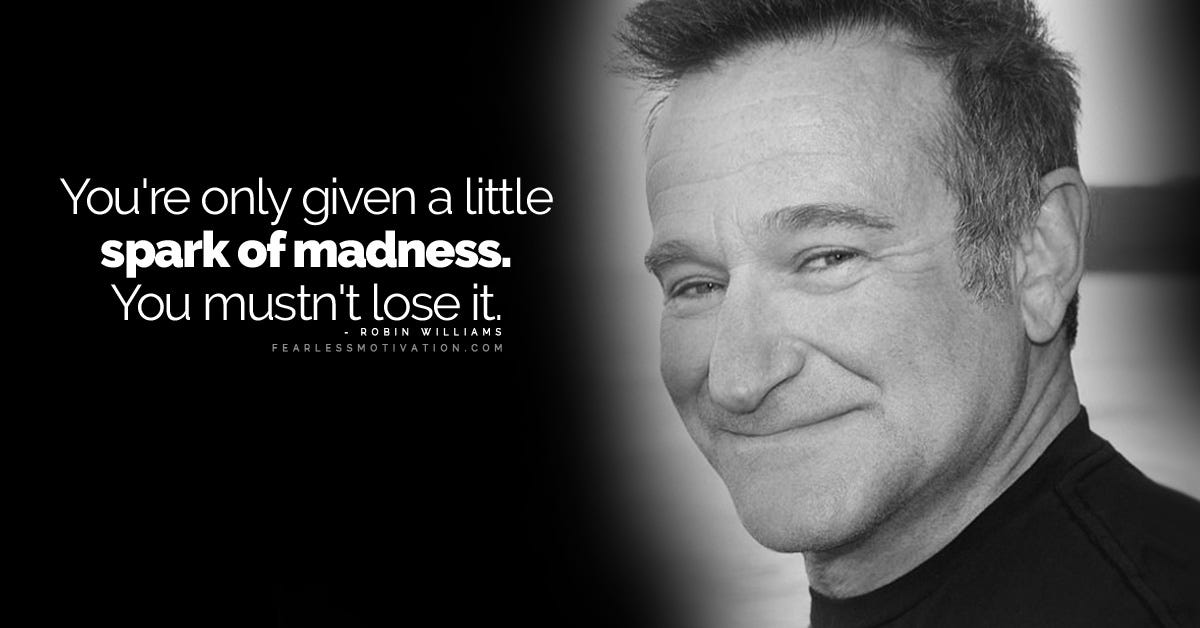
In 2007, Robin Williams was performing for soldiers in Kuwait when the bugle sounded Retreat at the end of the day. In military circles, three daily rituals are both symbolic and important: Reveille, Retreat, and Taps. Each carries its importance to members of the military, but may not be as familiar to individuals who have never served. Retreat marks the end of the day and concludes with a hand salute as the flag is slowly lowered and stored for the day. Robin Williams was not familiar with the ritual until it interrupted his performance as part of a USO Holiday Tour.
Always the consummate professional, he showed great stage presence by not letting an unexpected interruption become a disruption; he joined in by standing respectfully because his audience did. He then returned to making the soldiers laugh by extemporaneously weaving the event into his comedy routine. Watch the clip and then envision yourself as a speaker having a similar experience during your presentation.
One quote attributed to Robin is Comedy is acting out optimism. His acting and comedy routines exemplified his optimism in himself and humanity.
Developing communication skills, whether formally or informally, is a lifelong journey that does not magically appear when you accept the title of leader. It comes with hard work and refinement. I've analyzed the presentation styles of inspirational speakers, ministers, public officials, and comedians. Each has their own unique style, and if you examine their development, you will learn what I learned years ago in a high school acting class: you have to observe, experiment with different deliveries, and even rehearse key phrases or responses if you are to engage in effective communication.
Leaders set the standard within their organization for effective communication. Members of your team must understand your goals, the methods that you feel will effectively achieve them, and how to adjust if the initial strategy doesn’t work. Moreover, they must feel free to express their viewpoints without fear of hostile responses or antagonism. Leaders with effective communication skills help members of their organization and team navigate the complexity of the chaotic environment that often exists and must be confronted if you are to be successful.
The Gettysburg Address is one of the great examples of uncommon excellence in rhetorical skill.
Alan McKay has described the characteristics of such excellence in his narrative.