
Keeping the Faith

We were wrapping up a typical church meeting that had gone longer than planned and, unfortunately, despite being led by extremely talented people, failed to reach a decision. My job as a member of the committee was to offer creative solutions and take notes. As I put my journal away and prepared to leave, I looked across the table and observed the chairperson doing the same, but with a dejected air. I walked around the table and gave him a hug and remarked, Keep The Faith. He responded to the hug, smiled, and responded, I will! The phrase keeping the faith has deep roots that stretch across ancient religion, classical ethics, and Christian scripture, and its meaning has broadened over time while keeping a core idea: steadfast loyalty to a trust or belief. That is the state of traditional mainstream churches today; they are hanging on and trying to remain loyal to beliefs that they may have held for centuries, all the while trying to manage changes that are often overwhelming.
There are no simple solutions. Life is complex, and meeting the spiritual needs of a diverse population is challenging. But here are a few thoughts that I think arise from these trends.
Religion and Spirituality are Intertwined.
Religion and spirituality are closely linked but not identical. For many, religion provides the structure through which spirituality is lived; others identify as spiritual without being religious, seeking meaning outside traditional institutions. Some emphasize religious practice over faith formation, while others draw spirituality from multiple traditions. Broadly, religion tends to be communal and institutional, while spirituality is personal and inward—though these boundaries are fluid. Churches must engage both.
Several tensions shaping U.S. churches include
Cultural relevance: Churches struggle to connect with younger generations amid changing expectations around authenticity, technology, and social issues, while balancing the differing values of multigenerational congregations.
Theological and social divisions: Issues such as LGBTQ+ inclusion, women’s leadership, politics, and racial justice force churches to navigate between alienating members and often appearing irrelevant.
Time and attention: Church participation now competes with work, sports, and other commitments in ways it once did not.
Authenticity and community: Skepticism toward institutions drives demand for transparency and genuine relationships; performative or judgmental churches lose credibility.
Seekers and believers: Congregations must serve longtime members while staying accessible to newcomers with little religious background.
Digital engagement: Post-pandemic churches continue to wrestle with the role of online versus in-person community.
New Models of Worship
No church can successfully address all these issues, but those that are growing and attracting new members craft a new model of worship that is relevant to the struggles of a younger generation. Generation Z is spiritual but largely has avoided participation in formal church services. This generation wants a message with substance and authenticity, but it often needs to be paired with an understanding of life’s challenges. I was like them once, and one interesting experience launched my spiritual journey.
I was a struggling pre-pharmacy student recently discharged from the Navy and trying to pick up the pieces of my life. I was recently married and giving higher education another shot. One Sunday, I was sleeping in and forgot to turn my clock radio off. Because we lived in a suburb of Atlanta, timing my trip during the rush hour to the commuter school I attended in the inner city was challenging. The radio came on at 6:30 just like it did most weekdays, and I was too tired to reach over and turn it off. It was a radio station that carried a sermon from Dr. Charles Stanley, the recently installed pastor of the largest Southern Baptist Church in Atlanta.
He was speaking very casually about faith and prayer, specifically how to pray.
He remarked, You know, people pray for the strangest things. They pray to be humble. Do you know how God makes us humble? He takes us off at the knees! And they pray for patience. Did you ever notice that God teaches us patience? He forces us to wait for something that we desperately want. So, the next time you are tempted to pray for something from God – Think!
The short sermon taught me two things that have stayed with me all these years. The first and most obvious thing is to think about what you pray for. Second, God is in control, and if the prayer is answered, it will be in the way and at a time of God’s choosing.
The reason I share this is that the church is going through a similar experience. We are praying to God that people will magically appear at the door of our church ready to receive his message. We forget that God wants us to minister whenever and wherever there are people in need, not only for encouragement but for someone to show that they honestly care about them, where they are in their lives. That does not always occur within the four walls of a place called a House of Worship. People will remember messages that have meaning, like the one I received from Dr. Stanley, and will share it with others. I never personally met Dr. Stanley, but many individuals I talked with knew who he was. His message carried authenticity and relevance, and it resonated with others just as it did with a drowsy, overworked, and stressed-out college student.
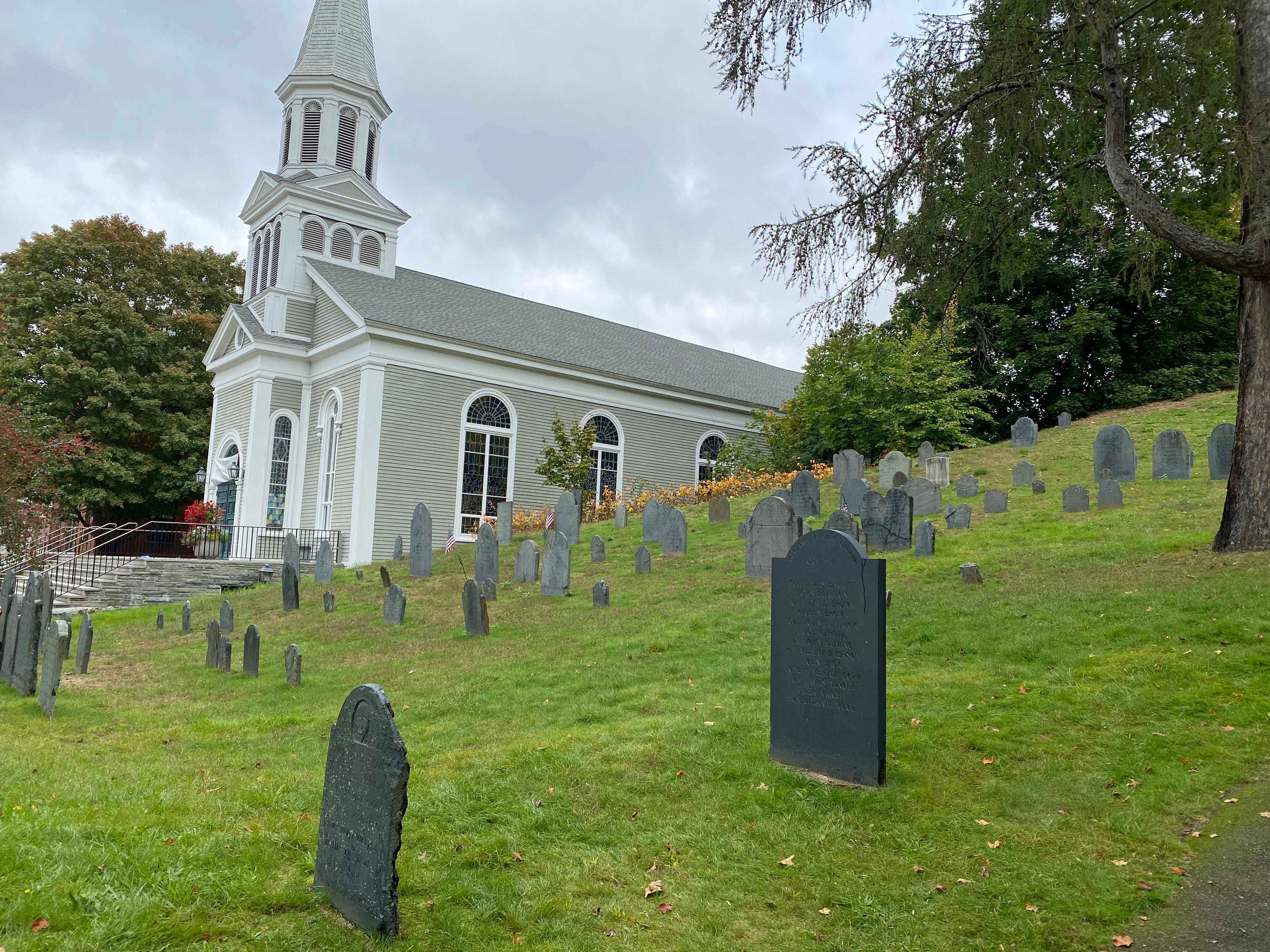
The church of today and its members need to examine the message they share with others. Unfortunately, in many cases, the message is delivered in a staid traditional form of worship that is no longer relevant to large segments of the population. If that model were attractive, almost all protestant denominations would not be declining in membership. How do churches and their members keep the faith that the church they attend was founded on and revitalize their message? It begins with looking in the mirror and seeing ourselves as others see us. I have lost count of the studies that characterize the situation that most mainstream churches find themselves in today because they generally reach the same conclusions. Here is a brief overview of the conclusions that most of those studies reach.
Rigidity
Traditional churches have developed rigid bureaucracies that once supported effective governance but now often hinder agility and growth. Built for a different era, when membership was stable, volunteerism was high, and denominational identity was culturally clear, many governance structures have become ends in themselves rather than tools for ministry. As a result, decision-making is slow, opportunities are missed, and responsiveness to cultural and congregational change is limited.
Younger, more agile congregations, especially non-denominational churches and New Worshiping Communities, adapt more quickly to shifting needs, which helps explain their rapid growth.
Higher education faces similar pressures. Changing technology and student expectations have forced institutions to rethink their business models and governance. Colleges benefit from boards that can advise and finance innovation, an advantage most churches lack, yet the need for organizational change is just as urgent.
A useful guide for this transition is the Structure–Process–Outcome model, developed in the 1960s for healthcare and still widely used for organizational assessment:
Structure: Governance, facilities, staffing, organizational design
Process: Worship, education, outreach, ministry practices
Outcome: Membership, engagement, community impact, spiritual development
This model assumes that healthy structures enable effective processes, which lead to positive outcomes. While spiritual outcomes are harder to measure than medical ones and ministry effectiveness is often subjective, the framework offers a practical way to evaluate and redesign church governance, making it more agile, responsive, and aligned with today’s realities rather than yesterday’s traditions.
Structure
Typical protestant and, to a lesser extent, evangelical churches are struggling with outdated bureaucracies. It would be an oversimplification to simply state that outdated church structures are leading people to leave mainstream churches, but you only have to observe where the switchers are going – Non-denominational and New Worshiping Communities that have very flat organizational structures and significantly reduced assessments (e.g., head tax) for funding the denomination’s organizational structure. The constitutional structure of mainstream churches is enormously complex. For example, The Book of Order, in the Presbyterian Church, creates a multi-layered system—Session, Presbytery, Synod, General Assembly, each with specific responsibilities, meeting schedules, and per capita assessments. Here’s the cruel irony: Presbyterian polity, which emphasizes deliberative process and representative governance, makes it extremely difficult to change Presbyterian polity. Other denominations use similar organizational frameworks that are a reflection of their tradition, sometimes dating back centuries.
This was designed for stability, but now serves as an obstacle to innovation and change. It also means the people most invested in the current system control the change process, and change happens glacially, if at all. These are structural issues that are unlikely to change quickly. What is actually forcing denominations to change is financial decline.
A bishop within the United Methodist Church recently characterized the situation as the financial house is on fire. His concern was the rates of apportionments or shares of UMC giving that sustain denomination ministries were at the lowest point since 1984. Our goal was to meet the emerging financial reality but also to determine how we can continue to serve the church as it’s becoming something different than it was, Presiding Bishop Sean Rowe of the Episcopal Church said in an interview. The Presbyterian Church (PCUSA) faced the same situation and recently moved to close missions and fold the World Mission Budget into operations. They created what is called the Interim Unified Agency.
Can structural changes save these denominations? Probably not by themselves, but keeping the current structure almost ensures continued decline. These denominations face a choice between structural reforms that might alienate traditionalists but could create space for renewal or keeping current structures while managing decline. Growth, where it is occurring, is in New Worshiping Communities and Non-denominational churches, where the organizational structure is less encumbering. The Annual Report of the PC (USA) in 2024 noted that New Worshiping Communities saw an increase of 41 to 308 communities total in 2023, which is double the growth of new worshiping communities from 2022.
Structural changes at the individual church level may include
Simplify decision-making: Set clear spending thresholds and decision rights so staff or ministry leaders can act independently, fostering accountability.
Flatten hierarchies: Evaluate whether every committee or board adds value; cut unnecessary layers.
Create rapid response teams: Small, trusted teams can act quickly on opportunities, crises, or new ministry initiatives.
Reduce reporting overhead: Focus on mission-critical metrics; keep annual reports brief and strategic.
The goal of these changes is to streamline the bureaucracy, saving valuable resources that can be devoted to spiritual growth in other areas of the church.
Process
The core question for a church is whether its message and actions resonate with people who hear it. Often, the Gospel itself is still powerful, but delivery methods, language, or cultural assumptions no longer connect with people’s lives. At heart, it’s about the church’s relationship with its members.
This creates a dilemma: change to attract newcomers and risk alienating loyal members or resist change and see continued gradual decline. Some researchers argue that many individual mainline congregations may not survive—but that doesn’t mean mainline Protestantism will disappear. New expressions, church plants, and congregations willing to die and be reborn in new forms can carry the tradition forward. That has been the history of Christianity, and we may be witnessing the latest version as the church adapts to new realities.
Survival may hinge less on structural tweaks and more on recovering a compelling mission that inspires people to join your church community. It begins with outreach to visitors both when they first attend and later by a committed member of the church congregation. This begins a process of finding and using members’ talents, not just for choirs, boards, or fundraising, but to advance the church’s mission.
People want to feel needed. They turn to churches out of a desire to belong to a community of believers. Understanding why someone visited and eventually chose to join a church, through community audits or personal outreach, can guide engagement and revitalize the church. Growing churches contact new members within 48 hours, connecting them with programs, mission efforts, or affinity groups, ideally through an active member who can share their experiences and encourage involvement. This mission should not fall to the pastor alone. The church should have a trained team made up of members who are passionate about outreach visits with anyone interested in learning more about what the church and Christ have to offer to their lives.
The Apostle Paul, in his letter to the Corinthians, recognized the importance of gifts and the need for the church to use them. There are different kinds of gifts, but the same Spirit distributes them. There are different kinds of service, but the same Lord. There are different kinds of working, but in all of them and in everyone it is the same God at work. Now to each one the manifestation of the Spirit is given for the common good. [1 Corinthians 12:4-7 (NIV)].
In the context of church ministry assessments, Saddleback Church, an Evangelical Christian Megachurch with Baptist roots, uses SHAPE, an acronym that stands for Spiritual gifts, Heart (passions), Abilities (skills), Personality, and Experiences. The affinity groups listed on their webpage are truly breathtaking. The list goes on for pages. This framework helps individuals either interested in attending the church or are new members to find where they belong. That is the definition of an affinity group. Each church should have a team of Connection Coaches whose job is to ensure every new member is seen, known, and invited. Success means a newcomer finds their place quickly and feels connected to the church and its mission. Growing and thriving churches have a visible outreach.
Growing churches actively serve the communities where they are located.
· Community Partnerships: They go beyond hosting groups, becoming community hubs. Some convert underused space into business incubators, affordable housing, or centers for childcare, soup kitchens, or warming shelters.
· Service as Evangelism: Faith is expressed through tangible acts of service and justice, appealing especially to younger generations who value action over words.
· New Worshiping Communities: These vary widely, ranging from contemporary services with bands and multimedia to house churches, pub theology groups, dinner churches, or mission-focused gatherings. Some meet in coffee shops, breweries, community centers, online, or even on football fields and college campuses. It is not the location that is important; it is the ability to bond with members, both existing and new.
· They may redefine worship, community, and conversion based on local context, as seen in examples like Twelve Stone Farm or The Church at Spring Forest that occur in the beauty of the natural environment.
Outcome
Some would argue that we are in the midst of a revival of faith, but in a significantly different form than the camp meetings I described in the last blog post. Unlike the Great Awakenings of the past, this current movement is.
Digital & Decentralized: It is fueled by TikTok, podcasts, and viral clips rather than single celebrity evangelists.
Culturally Contrarian: Many young believers describe their faith as a form of rebellion against a mainstream culture they find hollow or even hypocritical.
Relational: There is a heavy emphasis on micro-churches and informal gatherings rather than mega-church productions.
Churches that recognize this as an opportunity must face three (3) realities.
Resourcing the Pulpit – Limited resources and overworked pastors make new initiatives challenging. Pastoral vacancies strain search committees, and even larger churches face staffing and budget pressures. Effective leadership is needed to free pastors for future planning.
By 2026, roughly 15,000 U.S. Protestant churches cannot afford a full-time pastor, prompting a shift from the traditional one-pastor model toward collaborative, decentralized structures. Churches are increasingly relying on bi-vocational and lay pastors, historically used by Methodists, to fill leadership gaps, support smaller congregations, and provide pastoral care without the cost of full-time clergy.
Amplifying the Message – Traditional Protestant churches have lagged behind evangelical and non-denominational churches in using technology to extend their reach. With busy schedules, many people no longer reserve Sundays for church, making digital access appealing. Capturing sermons allows content to be repurposed for different audiences at different times and in alternative formats. For example, recordings of sermons can be reused like university lecture repositories, enhanced with captions for the hearing impaired, converted into podcasts, or accompanied by links to readings for deeper engagement—all manageable by a tech-savvy volunteer.
Technology can also support message development. As AI becomes widely recognized for research and content creation, ministers using chatbots to explore scripture, extract content from earlier sermons, or phrasing can improve their message while reducing preparation time. A minister can prepare the initial message, create a summary for the church’s webpage, and a second version to be delivered as a podcast later in the week. One message with three (3) effective versions.
Faith Formation – People are drawn to churches by faith, particularly young people who are still developing their personal definition of faith, religion, and spirituality. They may be struggling with issues, but in the final assessment, they have a faith in God that needs nurturing. We must remember it is not just our faith to keep; it is our faith to share with others. Just like a sincere word of encouragement or a gentle hug, God wants us to demonstrate our faith to others.
Dr. Stanley spoke often with groups of young adults, and he would remind us that young adults have a keen radar for inauthenticity. He taught that churches shouldn’t water down their message or try to be cool, but instead should present genuine faith that addresses real struggles. Young adults, he argued, are searching for truth that works in the messy reality of their lives—career uncertainty, relationship questions, identity formation, and purpose-seeking.
He taught that churches should create environments where young adults feel safe to ask hard questions, express doubts, and grow at their own pace. Stanley believed spiritual maturity is a journey, not an overnight transformation, and young adults need patient mentoring rather than stale platitudes or judgment.
Simply praying for an outcome without asking God to show you what you can do personally to affect that goal is usually not productive. Perhaps, following Dr. Stanley’s advice, we should make the following prayer every day.

Lord, give me the courage to pray boldly and humbly and to surrender completely. Make my heart align with Yours. Change me through my prayers and help me trust You with the answers. Amen.
It was challenging to just cover the major issues. I think churches are making progress and Gen Z’s are watching.
I think it's interesting that your focus is shifting from the academy to the church and hope it is a shift that you embrace. Applying experience you garnered from one institutional model to another adds weight to your reflections and speaks to what I think about during the course of my days.